
RESEARCH PAPER
Physicochemical characteristics of raw propolis from Polish urban apiaries
1
Deparment of Food Biotechnology and Microbiology, Institute of Food Sciences, WARSAW UNIVERSITY OF LIFE SCIENCES, Poland
Submission date: 2026-08-04
Final revision date: 2026-10-04
Acceptance date: 2026-11-16
Publication date: 2026-11-22
Corresponding author
Katarzyna Pobiega
Deparment of Food Biotechnology and Microbiology, Institute of Food Sciences, WARSAW UNIVERSITY OF LIFE SCIENCES, Poland
Deparment of Food Biotechnology and Microbiology, Institute of Food Sciences, WARSAW UNIVERSITY OF LIFE SCIENCES, Poland
Food Biotechnology and Agricultural Science 2026;80:40-46
KEYWORDS
TOPICS
ABSTRACT
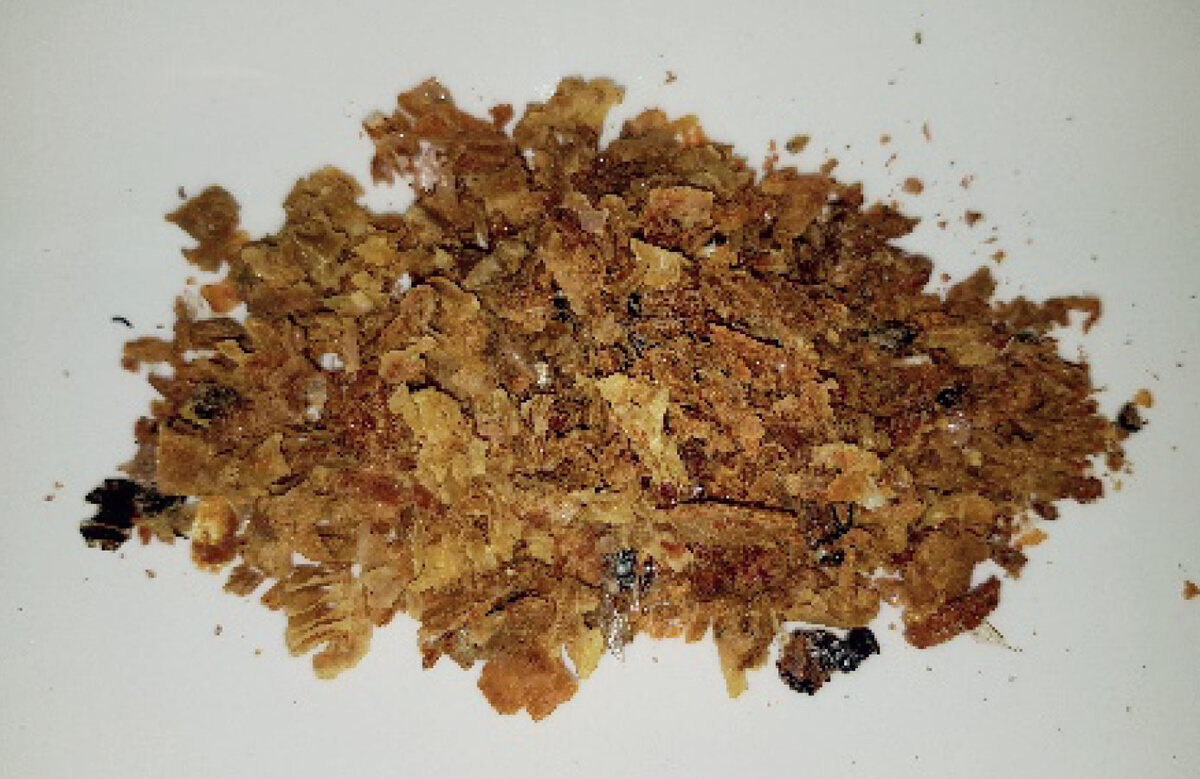
Urban beekeeping is expanding, yet raw propolis from city apiaries remains poorly characterised. This study evaluated the physicochemical characteristics of raw propolis collected in 2019 from six Polish urban rooftop apiaries located in Kraków, Katowice, Warsaw, Legionowo, Łódź and Toruń. The samples were assessed macroscopically and analysed for wax, moisture, and 70% ethanol-soluble and insoluble fractions. They differed in colour and consistency, ranging from light-brown, loose material to dark-brown, compact and hard propolis. Wax and moisture contents ranged from 9.22 to 15.26% and from 5.66 to 10.34%, respectively, while the ethanol-soluble fraction ranged from 60.58 to 68.39%. Within this set of samples, the Kraków material had the lowest wax and moisture contents and the highest soluble fraction, whereas the Łódź sample contained the largest insoluble fraction. These data demonstrate variability among the analysed raw propolis materials and identify Kraków and Katowice samples as suitable candidates for further extraction studies. Because the study covered one apiary per city and a single collection season, broader multi-apiary and multi-year sampling is required before the observations can be generalised to individual cities or to urban propolis as a whole.
| eISSN: | 3071-7264 |
| ISSN: | 3071-7256 |

We process personal data collected when visiting the website. The function of obtaining information about users and their behavior is carried out by voluntarily entered information in forms and saving cookies in end devices. Data, including cookies, are used to provide services, improve the user experience and to analyze the traffic in accordance with the Privacy policy. Data are also collected and processed by Google Analytics tool (more).
You can change cookies settings in your browser. Restricted use of cookies in the browser configuration may affect some functionalities of the website.
You can change cookies settings in your browser. Restricted use of cookies in the browser configuration may affect some functionalities of the website.