
REVIEW PAPER
Synbiotic Formulations with Lactic Acid Bacteria to Modulate GLP-1/PYY Pathways in Obesity
1
Department of Microbiology, Prof Waclaw Dabrowski Institute of Agricultural and Food Biotechnology-State Research Institute, Poland
Submission date: 2026-04-13
Final revision date: 2026-09-14
Acceptance date: 2026-09-18
Publication date: 2026-11-22
Corresponding author
Agnieszka Zapaśnik
Department of Microbiology, Prof Waclaw Dabrowski Institute of Agricultural and Food Biotechnology-State Research Institute, Rakowiecka 36, 02-532, Warsaw, Poland
Department of Microbiology, Prof Waclaw Dabrowski Institute of Agricultural and Food Biotechnology-State Research Institute, Rakowiecka 36, 02-532, Warsaw, Poland
Food Biotechnology and Agricultural Science 2026;80:20-29
KEYWORDS
TOPICS
ABSTRACT
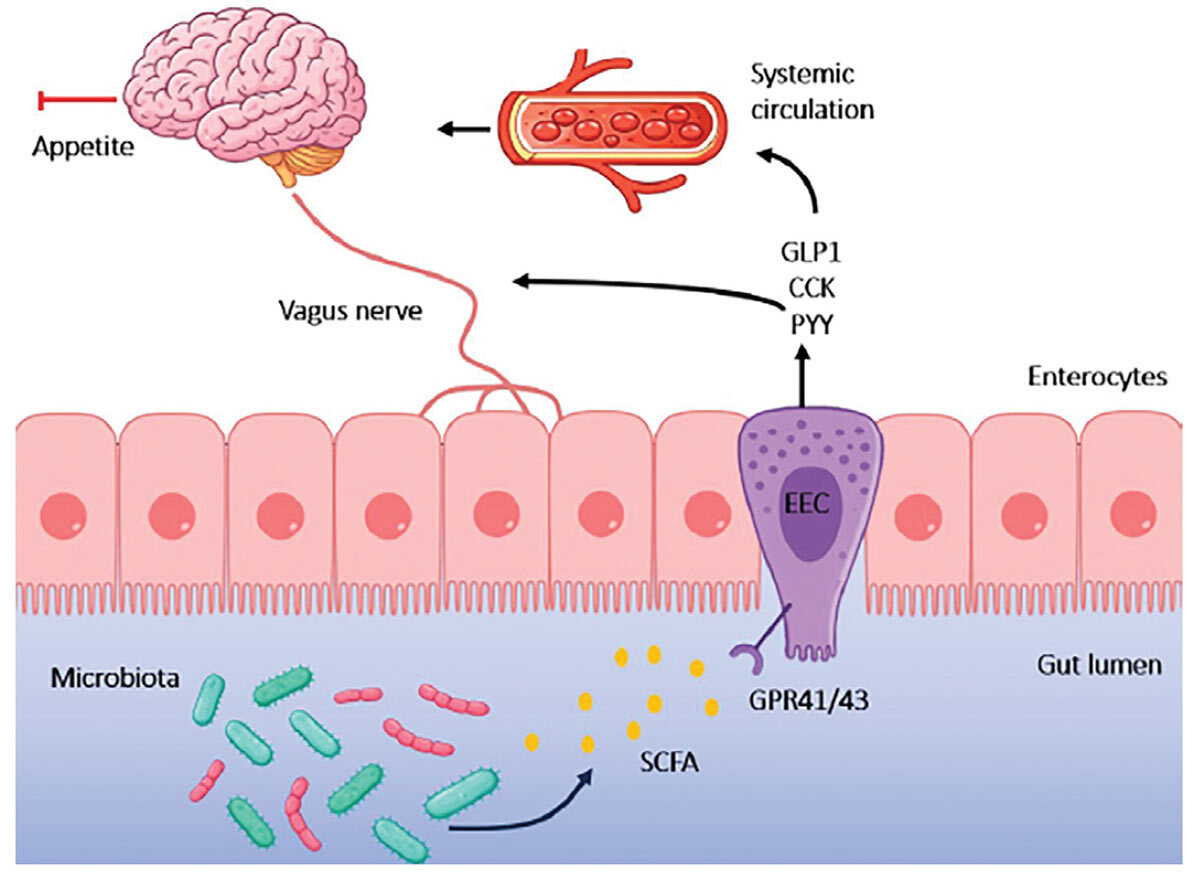
Obesity is an escalating global public-health challenge, closely linked to gut-microbiota dysbiosis and disruption of the gut–brain axis. Intestinal L cells secrete the incretins GLP-1 and PYY, which suppress appetite, slow gastric emptying, and improve glucose–insulin balance. Their activity is strongly modulated by short-chain fatty acids (SCFAs-acetate, propionate, butyrate) generated by fiber fermentation. Via FFAR2/FFAR3 receptors, SCFAs increase GLP-1/PYY secretion, strengthen the intestinal barrier, and dampen low-grade inflammation, enhancing insulin sensitivity and weight control. Growing evidence shows that SCFA-producing probiotics (e.g., Bifidobacterium animalis, Clostridium butyricum, Butyricimonas virosa), fermentable prebiotics (inulin/FOS), and polyphenols can synergistically potentiate this pathway. Polyphenols act through two routes: direct activation of L cells (taste/GPCR signaling) and indirect promotion of SCFA production by reshaping the microbiota. This review examines the potential for developing a functional symbiotic, combining SCFAs producing strains with an appropriate prebiotic and bioactive polyphenols as a natural strategy to enhance appetite regulation, glycemic control, and energy homeostasis through modulation of the GLP-1/PYY pathway.
Keywords: GLP-1, short-chain fatty acids, obesity, probiotics, satiety hormone regulation
| eISSN: | 3071-7264 |
| ISSN: | 3071-7256 |

We process personal data collected when visiting the website. The function of obtaining information about users and their behavior is carried out by voluntarily entered information in forms and saving cookies in end devices. Data, including cookies, are used to provide services, improve the user experience and to analyze the traffic in accordance with the Privacy policy. Data are also collected and processed by Google Analytics tool (more).
You can change cookies settings in your browser. Restricted use of cookies in the browser configuration may affect some functionalities of the website.
You can change cookies settings in your browser. Restricted use of cookies in the browser configuration may affect some functionalities of the website.